Tag: ai-automation

Summaries

AI Engineer

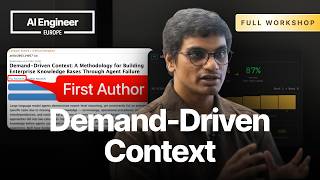
Build Knowledge Bases from Agent Failures

Assign real enterprise problems to AI agents; their failures reveal exact knowledge gaps. Fill them iteratively to create a demand-driven context base that makes agents semi-autonomous—far better than dumping uncurated RAG data.

MarkTechPost

Multi-Agent AI Pipeline for Systems Biology Analysis

Use Python agents to generate synthetic bio data for gene regulation (14 genes, 0.20 edge prob), predict PPIs (LR AUC/AP on feature diffs/sims), optimize metabolism (8000 flux iters under O2/substrate budgets), simulate signaling (ODE peaks/timings), then GPT-4o-mini synthesizes integrated report.

Sam Witteveen

6 Agentic Patterns from Claude Design for Vertical Apps

Claude Design's edge comes from stacking 6 patterns—context grounding, structured memory, iterative multimodal refinement, self-QA, multi-variation generation, handoff—around a strong LLM like Opus 4.7. Build your legal, sales, or medical agents the same way: ground in user data first, then iterate with quality checks.

IBM Technology

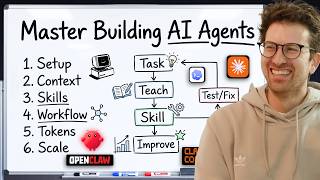
OpenClaw: LLM Agents via ReAct Loop and Skills

OpenClaw builds autonomous AI agents by combining LLMs with tools in a ReAct loop (reason-act-observe), using a local Node.js gateway, adapters for messaging, and extensible skills folders to automate tasks like Docker builds or CRM updates—secure with isolation and credential encryption.

Latent Space (Swyx + Alessio)

Shopify's AI Surge: Custom Tools Beat Hype

Shopify CTO Mikhail Parakhin details near-100% internal AI adoption post-Dec 2024, unlimited Opus-4.6 tokens, and tools like Tangle, Tangent, SimGym that make ML reproducible, auto-optimized, and customer-simulatable—revealing review loops and CI/CD as true agent bottlenecks.

IBM Technology

AI Agent Skills: Procedural Knowledge via Markdown

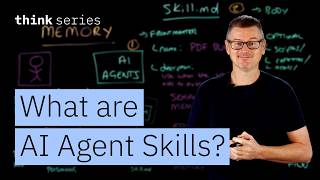
Skills add procedural knowledge to AI agents through simple skill.md files with YAML frontmatter for name/description triggers, using 3-tier progressive disclosure to avoid token limits, as an open Apache 2.0 standard portable across platforms like Claude Code and OpenAI Codex.

IBM Technology

RAG + Agents Fix AI for Mainframe Ops

General LLMs hallucinate on mainframe queries like CICS errors; ground them with RAG using docs and best practices, then add agents to automate tasks like health checks and ticketing for accurate, live insights.

AI Simplified in Plain English

H2E: 4 Pillars for Provable AI Agency in Safety-Critical Systems

H2E wraps LLMs like Gemini 2.0 Flash in a 4-pillar framework—Civilizational Thinking (SROI > 0.9583), Mathematical Foundations (Pydantic JSON), Industrial Engineering (Sentinel hard-stop), Real-World Deployment (logged execution)—to ensure deterministic control of infrastructure like power grids.

Nick Puru | AI Automation

Fix OpenClaw Security Risks with Kompaiou

OpenClaw orchestrates AI agents brilliantly but exposes users to massive security risks in integrations. Kompaiou adds secure OAuth, token management, and context-efficient tools for 1000+ apps, preventing disasters like 30k exposed instances and 20% malicious skills.

__oneoff__

Public Models Reproduce Key Anthropic Mythos Vulns

GPT-5.4 and Claude Opus 4.6 reproduced Anthropic's Mythos vulnerabilities in FreeBSD (CVE-2026-4747, 3/3 exact), Botan (CVE-2026-34580/82, 3/3 exact), and OpenBSD (27-year bug, Claude 3/3 exact) using open-source opencode agent, proving AI vuln discovery is accessible; real moat is validation and workflows.

Source Code (Every.to)

Folders Turn LLMs into Specialized Agents

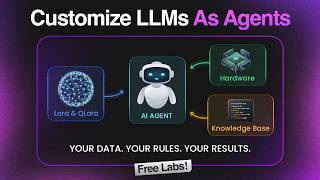
Specialize LLMs by pointing them at project folders with CLAUDE.md instructions, docs, runbooks, and skills—creating agents that inherit your codebase's context. Scale to 44 parallel agents via a file-based dispatch layer using /hey for status and /orchestrate for task routing.

Nate Herk | AI Automation

5 Simple AI Workflows Businesses Pay Most For

Businesses pay premium for 5 'boring' AI automations that save time, cut costs, and fix errors: speed-to-lead (10x conversion boost), document processing ($70k/year savings), follow-ups (80% sales need 5+), reactivation (200% ROI), and reporting (avoids $12k/month errors).
© 2026 Edge