SageMaker Fine-Tuning: LoRA Beats QLoRA on Cost-Perf Balance
LoRA cuts trainable params by 96% vs full fine-tuning, balancing cost savings and accuracy on Llama2-7B/Mistral7B; QLoRA saves 8x memory but trains slower due to dequantization overhead.

Short, curated notes. One email when something good lands.
LoRA cuts trainable params by 96% vs full fine-tuning, balancing cost savings and accuracy on Llama2-7B/Mistral7B; QLoRA saves 8x memory but trains slower due to dequantization overhead.

Bigtable auto-scales to hundreds of petabytes and millions of ops/sec with low latency, powering Google Search/YouTube/Maps; ideal for time series, ML features, and streaming via Flink/Kafka integrations.
Multi-node DDP demands identical environments, data access, and open security groups across EC2 instances; use torchrun launcher with DDPManager for minimal code changes and reliable gradient sync via NCCL.

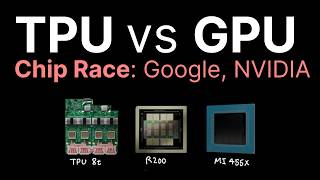
Google's TPU v8t (training) and v8i (inference) lag Nvidia GPUs per chip but deliver superior performance at scale—9600-chip superpods hit 121 exaFLOPS FP4—via cube topology and Virgo networking, optimizing for AI's bandwidth-heavy workloads.

Google Cloud Next '26 demos production multi-agent systems using open-source ADK for any language/model, modular skills for efficient context, and tools like MCP servers—open-sourced Race Condition repo for marathon planning.

Reiner Pope deduces frontier LLM training and serving mechanics from roofline analysis, revealing batch size as the core driver of latency-cost tradeoffs, with optimal batches of ~2000 tokens amortizing weights for massive gains.
Run a recommendation feed for 72,000 Bluesky users using one Go process on SQLite in a living room PC (16 cores/96GB RAM/4TB NVMe), proxying via $7 VPS over Tailscale, for $30/mo total—scalable to 1M DAUs.

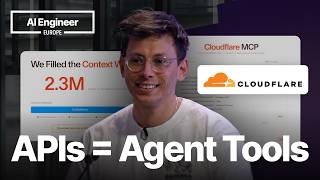
Bypass MCP tool context explosion (1.1M tokens for Cloudflare's 2600 endpoints) by letting agents generate TypeScript code against typed SDKs and run it in isolated V8 sandboxes like Cloudflare Workers with programmable guardrails.

Developers evolve into AI agent managers; Replit enables non-engineers to build production apps via natural language, scaling instantly on Google Cloud with built-in reliability.

Google's Agent Starter Pack CLI generates full production-ready AI agent stack—FastAPI backend, Terraform IaC, CI/CD, Vertex AI eval, observability—in 60 seconds, cutting typical 3-9 month infra setup to minutes across 6 templates.
Use Google's ADK and Python to build a bi-directional streaming multimodal agent powered by Gemini 3.1 Flash Live, test locally, and deploy to Amazon Lightsail for real-time audio/video processing.
Run Claude Code in browser cloud sessions with preloaded Python/Node/Ruby/Java/Go/Rust/Docker/DBs; configure networks/setup scripts; teleport tasks between web/terminal via --remote/--teleport for seamless local-cloud workflow.
Deploy AI agents and apps on Cloudflare's global network—330+ cities, blocks 215B threats daily, 60+ unified services for connect/protect/build without ops overhead.

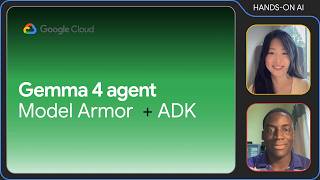
Deploy secure, observable Gemma 4 agents on Cloud Run using load balancers for Model Armor integration, ADK for model-agnostic agents with vLLM, and Prometheus/Cloud Trace for metrics like GPU util and latency.

Build a production Gemma 4 agent stack on GCP: shield prompts with Model Armor via load balancer, deploy ADK agents on vLLM/Cloud Run, monitor via Prometheus/Cloud Trace for security, scale, and cost control.

Build a production-ready Gemma 4 agent on Cloud Run with load-balanced traffic routing, Model Armor security against prompt injection/jailbreaks, and observability metrics like GPU usage and token counts.
AWS S3 Files mounts buckets directly as file systems on EC2, containers, and Lambda—eliminating FUSE hacks and sync scripts for AI/ML workflows, but misconfigurations risk exposing, corrupting, or losing data.

Self-host open Gemma 4 on serverless Cloud Run GPUs: use Ollama for instant cold starts in dev or vLLM for model agility in prod, automated via Cloud Build CI/CD.

Hands-on guide to deploying open Gemma models on Google Cloud Run using Ollama for dev or vLLM for prod, covering agent system pillars like cost, scale, and model choice for custom AI agents.

Deploy open Gemma 4 LLM on serverless Cloud Run GPUs two ways: Ollama bakes model into container for instant cold starts; vLLM mounts from GCS FUSE for model swaps without rebuilds. Full CI/CD via Cloud Build.
Data engineering underpins all AI success with $105B market, lakehouses via Iceberg/Delta, real-time Flink/Kafka streaming, dbt transformations (70% adoption), and Databricks' $134B AI lead over Snowflake.
Deploy Gemma 4 31B (Arena #3) on 2x GCP NVIDIA L4 GPUs for $2.80/hour on-demand, achieving 23.4 tokens/second—fast enough for chat, agents, and internal tools using vLLM and 4-bit AWQ quantization.

Aspire orchestrates multi-stack apps via code (AppHost.ts), CLI, and dashboard; live demo deploys Next.js gardening site using Copilot, skipping YAML complexity.
Vercel's AI SDK unified multi-provider adapters, while AI Gateway handled retries and routing, slashing Zo Computer's retry rate 20x from 7.5% to 0.34%, lifting chat success to 99.93%, and dropping P99 latency 38% from 131s to 81s.

Solo builder hits 60M requests/month on RocketFlag using Go on Cloud Run across regions, batch DB writes to Firestore/BigQuery, Cloud Armor for security—total cost $180 USD/mo, zero SRE time.

Build and scale a Go app on multi-region Cloud Run to 60M reqs/mo solo: use multi-stage Docker, Cloud Armor regex filtering, and 1-min batch writes to Firestore/BigQuery to keep costs at $180/mo with zero SRE time.
GitBook uses Vercel's tag-based cache invalidation on merge events to deliver sub-300ms updates across 30k multi-tenant docs sites, serving 120M pageviews/month with 41% from AI crawlers.
Leaked secrets from 2022 still process payments as 'leak debt'; ruthlessly audit across local dev, CI/CD, and production to reach zero static secrets that never leak, expire unexpectedly, or need manual rotation.
Parasail generates 500B tokens daily by renting global GPUs and dodging peaks, enabling devs to run open-model agents affordably as API costs from OpenAI/Anthropic rise.

Google Cloud Next '26 spotlights production-ready AI agents via live demos, massive showcase floor with hack zones, and sessions on Gemini, ADK, generative UI—perfect for developers shipping autonomous apps.
Kepler Communications operates the largest orbital compute cluster with 40 Nvidia Orin processors across 10 satellites, enabling distributed edge inference for sensors—proving value before 2030s mega data centers arrive.
Anthropic explores in-house AI chips at early stage as Claude hits $30B annual run rate (up from $9B), securing 3.5GW TPU compute while custom silicon costs ~$500M.

GKE treats TPU slices as atomic units for seamless scaling up to 9k+ chips, with flexible capacity like DWS Flex/Calendar and custom fallbacks for cost-efficient ML training/inference.

Provision Hetzner VPS, apply cloud-init YAML for auto-setup of Archon v3 with Caddy HTTPS reverse proxy, Postgres DB, then configure .env secrets and optional form auth for secure 24/7 access via subdomain.
Anthropic overtakes OpenAI with 30x revenue growth to $30B ARR via top coding models, but Qatar's 34% helium cutoff doubles prices, bottlenecking AI datacenters.
Precise prompts reduce token usage; monitor via ACCOUNT_USAGE tables, set alerts, and enforce per-user daily credit limits like 5 for Snowsight to prevent surprise bills.
Horizontal scaling routes callbacks to replicas without client SSE/WebSocket connections, silently dropping updates—broadcast via Redis Pub/Sub so the owning replica delivers reliably.
Hyperscalers' $600B CapEx funds multi-year compute ramps to 20GW/year; labs like OpenAI/Anthropic need 5GW+ for inference growth. Key limits: ASML/TSMC logic, HBM memory crunch, but US power scales easily.
Earth's flat electricity growth can't match exploding AI chip demand; space solar offers 5x efficiency without batteries or regulations, making orbit the go-to for scaling AI within 36 months.
Deploy Playwright scrapers reliably in production using Bright Data's remote Browser API and Kubernetes Jobs/CronJobs to handle browser startup, proxies, retries, and scheduling overlaps.
Orbital datacenters tap 100% solar capacity in sun-synchronous orbits, beating Earth's 25% factor, but demand 10,000 Starship launches yearly for 100GW amid chip costs and no repairs—viable if SpaceX scales massively.

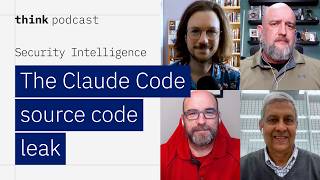
Leaked Claude Code source exposes npm vulnerabilities and AI agent risks in CI/CD, urging defenders to harden supply chains, rotate credentials rigorously, and test updates in labs amid brazen threat actor speed.

Human platform best practices—self-service, API-first, local workflows, API observability—unlock AI agent autonomy, closing loops on build-debug-ship cycles.

NVIDIA cuDF and cuML libraries turn Pandas and scikit-learn into GPU-accelerated drop-ins, querying 340M rows in 88ms vs. 9s on CPU—add one line of code.

Panel debates orbital data centers' feasibility amid hype—major engineering challenges but promising spin-offs like resilient hardware—while AI fatigue sparks Blue Sky bot backlash, signaling demand for human-only spaces.

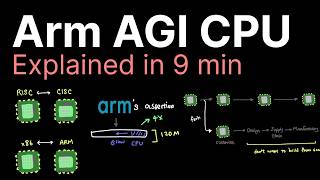
ARM enters CPU manufacturing with AGI chip for data centers, targeting 4x CPU growth from agentic AI (30M to 120M cores per GW), projecting $15B revenue in 5 years at 50% margins.
Legacy IAM crumbles under agentic workloads; AIAP brokers intent-driven, ephemeral access via 4 phases: discover/register, translate/authorize, broker/inject, watch/terminate—closing fragile identity chains before 2026 explosion.
Agentic AI pilots succeed but production fails 95% of the time on ROI due to underestimated costs 2-3x higher in data management, integrations, QA, people/process, observability, and lifecycle ops.
Agentic AI delivers dynamic orchestration, self-improvement, and massive scale but introduces access sprawl, novel attacks, and audit gaps—counter with identity-first contextual access, zero-trust enforcement, and explainable governance.
Parasail connects dozens of providers for on-demand Nvidia H100/H200/A100/4090 GPUs at lower costs than hyperscalers, claiming a fleet larger than Oracle's entire cloud to enable easy AI scaling.
For stateful services like websocket backends needing hours to drain connections, deploy Kubernetes with git SHA-named Deployments, switch Service selectors to new ones, and manually delete old after traffic burns down—avoids mass reconnects unlike rolling updates.
AWS activates Project Rainier with nearly 500,000 Trainium2 chips in record time; Anthropic scales to 1M+ chips by 2025, emphasizing reliability, custom stacks, and sustainability.
Informatica's IDMC platform integrates data services like cataloging, integration, quality, MDM, and governance with CLAIRE AI and metadata intelligence, enabling 50,000+ connections across hybrid/multi-cloud for secure, scalable automation and business outcomes like $4M retained revenue.
OpenAI's macOS signing cert exposed via malicious Axios npm package in GitHub Actions; rotate certs, pin to commit hashes, set minimumReleaseAge—no user data lost.
Shift Kubernetes Service selectors to new git-colored Deployments for zero-downtime deploys on stateful, long-connection services—old pods drain naturally without restarts.
Replace long-lived secrets with identity-based, short-lived access for AI agents using policy enforcement and real-time audits, saving 2-5 FTEs and cutting 85% of credential tasks per case studies.
Eliminate persistent elevated privileges by using AI to grant time-bound, task-specific access only on legitimate requests, auto-revoking after completion to prevent 80% of credential-based breaches.