Design & Frontend
The craft of building beautiful, functional interfaces. Design systems at scale, component architecture, motion, and the intersection of design tools and code.
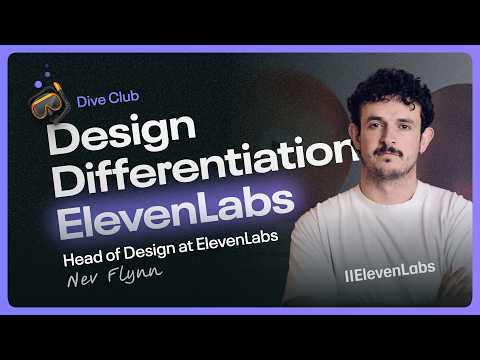
Artful Expression in Enterprise Design at ElevenLabs
Nev Flynn, Head of Design at ElevenLabs, explains how integrating specialist roles like WebGL experts and sound designers allows the company to maintain a creative, artful edge even as they scale into enterprise markets.
 Dive Club
Designing in the Age of AI and Agents
Product design is shifting from static mockups to dynamic, agent-driven prototypes. Success in 2026 requires embracing AI-assisted workflows, multi-tasking, and a 'publicly curious' mindset to navigate rapid industry changes.
 Dive Club
Scaling Design Operations with AI Agents
By treating design systems as strict foundations and using AI agents to automate repetitive tasks like data-driven asset generation and visual QA, a single designer can manage thousands of deliverables for large-scale events.
 AI Engineer
Steering AI Design with Adjectives and Verbs
Design cannot be 'oneshotted' by AI because it requires context and taste. Instead of full automation, use a vocabulary of design-specific adjectives and verbs to steer AI agents toward intentional, high-quality outcomes.
Moving From AI Questions to AI Answers
Most AI interfaces force users to initiate with a question, creating a barrier to entry. Instead, provide immediate value by starting with an answer, which improves capability awareness and reduces user friction.
Engineering Brand Universes in the Age of AI
Building a brand today requires moving beyond static assets to creating dynamic, interactive 'universes' where AI-driven workflows and real-time interface generation redefine how we build and ship products.
 Dive Club
Building Iconic Brands and Tools: A Conversation with Evil Rabbit
Evil Rabbit, founding designer at Vercel, shares his journey from a 12-year-old web designer in Argentina to shaping Vercel’s brand identity, emphasizing the power of minimalism, consistency, and building tools that empower developers.
 Dive Club
Architecting Intent-Driven UX: Moving Beyond Static Interfaces
To build reliable generative UI, move away from letting LLMs generate raw markup. Instead, use an orchestrator that maps user intent to a predefined, schema-compliant component catalog, ensuring the output remains consistent with your design system.
 AI Engineer
AI Design Patterns and the Rise of the Creative Technologist
The hosts explore how AI is shifting design workflows, emphasizing that the most effective AI tools are not fully automated but rather augment human decision-making and creative craft.
 Dive Club
Rethinking UI Through Small-Scale AI Integration
Software is shifting from rigid, deterministic interfaces to adaptive, human-centric experiences by embedding small, fast, and inexpensive AI models directly into common workflows.
Designing Grok Bot: A Journey of Iteration and Agent UX
John Bai, an early designer at Cursor, shares the iterative process behind Grok Bot, explaining why the team ultimately settled on a chat-based interface despite initial explorations into ambient, OS-native UI patterns.
 Dive Club
Building a Custom AI-Powered Prototyping Playground
Patrick Morgan built a custom, agent-native prototyping environment for Sublime Security that bridges the gap between static design tools and production code, enabling rapid, interactive iteration without the overhead of traditional design handoff.
 Dive Club
Evolving Design Workflows with AI-Driven HTML Artifacts
Designers are shifting from static tools to autonomous HTML-based workflows, using AI agents to generate, audit, and iterate on functional prototypes, motion, and UX copy in real-time.
 Dive Club
Nate Parrott on Building Claude Design
Nate Parrott explains how Claude Design evolved from a personal side project into a powerful tool for rapid prototyping, enabling designers to build custom, interactive interfaces at the speed of thought.
 Dive Club
Charlie Deets on Designing for Utility and Experience
Charlie Deets, designer of Safari and Dia, argues that in an era where execution is commoditized, a designer's true value lies in simplifying complex systems, maintaining clear personal design principles, and focusing on high-level decision-making over getting lost in implementation details.
 Dive Club
Pablo Stanley on Orchestration, AI, and Creative Agency
Designer Pablo Stanley explores the shift from hands-on creation to AI orchestration, arguing that while AI tools are powerful, designers must avoid delegating their critical thinking to maintain creative agency.
 Dive Club
Architecting High-Performance Data Visualization Apps
To build performant data visualization apps in 2026, prioritize a lean stack using Preact, Valkey for caching, and WebAssembly for heavy computation to handle 100k+ data points efficiently.
Building Practical Figma Plugins with AI Agents
Avoid cluttering your workspace with redundant plugins. Instead, use AI agents to build custom tools that solve specific, repetitive manual tasks, following a structured prompt formula to ensure utility and maintainability.
 UI Collective
Loredana Crisan on Figma, AI, and the Future of Design Craft
Figma's CDO Loredana Crisan argues that AI is a tool for expression, not a replacement for human intent. The future of design lies in building systems and mini-apps that allow designers to maintain precision and soul in their work.
 Dive Club
Figma Updates: Code Layers, Motion, and AI Agent Workflows
Figma is blurring the lines between design and engineering by introducing native code layers, built-in motion/shader support, and AI-driven agent workflows that connect to external tools like GitHub and Notion.
Exploring CSS Functions and Conditional Logic
CSS is evolving to support custom functions and conditional logic, allowing developers to create reusable, dynamic styles that reduce boilerplate and improve developer experience.
Building Scroll-Driven AI Animations for Web
Create high-end, scroll-triggered interactive web experiences by combining AI-generated video assets with frame-by-frame control in Claude Code.
 UI Collective
Using CSS Style Queries for Conditional Theming
CSS style queries allow components to adapt their appearance based on parent-defined custom properties, enabling cleaner, conditional theming without relying on manual modifier classes or JavaScript.
 Kevin Powell
Evaluating Figma AI Agents: Practical Utility and Limitations
Figma AI agents currently excel at generating mobile flows rather than desktop screens, but they struggle to consistently apply local design system variables and styles unless full component libraries are connected.
Brett Williams on Building Gather: A Designer's Journey
Visual designer Brett Williams shares how he moved from Figma-only workflows to building a production-ready Mac app using AI, proving that design taste and clear communication are more critical than traditional coding skills.
 Dive Club
Designing and Building with AI: A Designer’s Frontend Workflow
A practical look at how designers can own the frontend by using AI agents as a force multiplier, leveraging tools like Conductor and Paper to bridge the gap between visual exploration and production-ready code.
 Dive Club
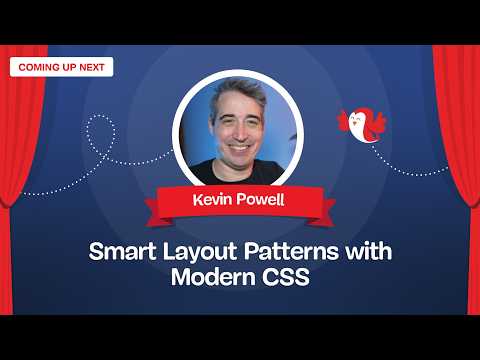
Smart Layout Patterns with Modern CSS
Modern CSS container queries and style queries offer a more robust, component-aware alternative to traditional media queries, enabling truly intrinsic and responsive layouts that adapt to their parent containers rather than just the viewport.
 Smashing Magazine
Fixing AI Design Drift with Code-Based Design Systems
AI agents often reinvent UI components in every session, leading to inconsistent 'design drift.' The solution is to move design systems out of static mockups and directly into your codebase as a single source of truth that agents are instructed to reference.
 Brian Casel
Three Essential CSS Layout Primitives
Kevin Powell shares three reusable CSS patterns—Stack, Prose, and Pile—that simplify layout management by using flexbox and grid primitives with customizable spacing variables.
 Kevin Powell
Beyond Static Components: The Future of Generative UI
Current agent UIs rely on static components, but LLMs are now capable of generating high-fidelity, accessible frontend code on the fly. The future lies in sandboxed, collaborative generative interfaces delivered via protocols like MCP.
Showing 30 of 153