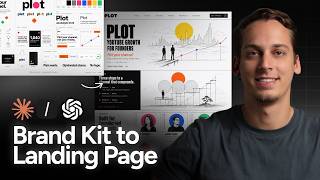
Impeccable Workflow: Words → Pictures → Code for Unique AI Sites
Impeccable in Claude Code uses teach-shape-visualize-craft to build branded landing pages with GPT Image 2 visuals, avoiding generic AI designs by prioritizing design before code.
Short, curated notes. One email when something good lands.

Impeccable in Claude Code uses teach-shape-visualize-craft to build branded landing pages with GPT Image 2 visuals, avoiding generic AI designs by prioritizing design before code.

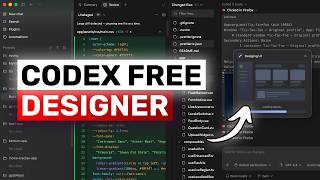
Combine free ChatGPT Codex with GPT-Image 2 to generate text-readable UI mockups (dashboards, landing pages, apps), then auto-code, test, and iterate frontend—more practical than Claude Design for developers.

Load the Huashu Design open-source skill into Claude Code to generate landing pages, slide decks, and prototypes matching Claude Design's quality without weekly usage limits—uses same system prompts but draws on your subscription.
Consolidate chats into one persistent interface, signal page-aware capabilities with clickable prompts and images, use progressive disclosure to avoid long threads, and add resize/save/voice for utility—backed by user studies on Home Depot, Amazon Rufus, and others.

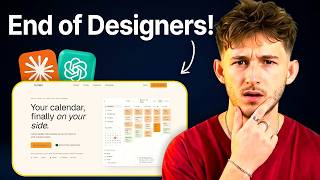
Combine Claude for planning/ building, ChatGPT Images 2.0 for pixel-perfect mockups with readable text, and Claude Design (Opus 4.7) for interactive HTML prototypes – generates $10K-quality sites from prompts, bypassing designers.

GPT Image 2 crushes benchmarks at 93% win rate by layering reasoning, web search, and verification on image gen, unlocking first-draft workflows for landing pages, ads, and UIs while enabling hyper-real forgeries.

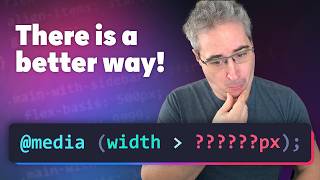
Replace media query magic numbers with container queries at 90ch: layouts switch to flex columns when content hits ~30ch per column, adapting to font-size changes without horizontal scroll.

OpenAI's GPT Image 2 ranks #1 on arena.ai, outperforming Imagen 2 (Google) by 24 points in realism, text rendering, and photos. Access via key.ai at 6¢/image; ideal for packaging, ads, mockups, and automated workflows.

Brett launched Design Joy solo in a weekend, hit $10K day one on Product Hunt with no audience, scaled to $1M/year netting $70-80K/month working 30 hours/week by productizing unlimited design subscriptions.

Transform static websites into interactive, scrolling journeys using Lovable (Claude-powered), sketches, uploaded videos, and real-time tweaks—saving tokens via inspiration from motions.ai and on-site editors.

Use Claude Design's animated video skill to generate 15-32 second high-energy promo clips from AI designs or Figma imports, ideal for social media and stakeholders—export as interactive HTML and screen record for MP4.

Top designers create taste by knowing when to break patterns and invent new ones; AI amplifies those who build custom tools and decide ruthlessly, enabling indie practices to push founders past 'good enough.'

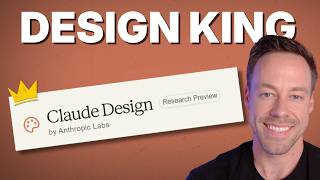
Theo tests Anthropic's Claude Design, an AI for generating UI prototypes from codebases. It streamlines wireframing, annotations, and code handoff, potentially disrupting Figma by empowering collaborative design without deep coding skills.

Anthropic's Claude Design generates quick, codebase-aware UI wireframes and prototypes, enabling iterative feedback and dev handoff—polished enough to challenge Figma, but word wrapping and details need fixes.

Claude Design generates multiple design variations via Socratic prompts and per-design sliders, letting non-designers like coders and marketers prototype UIs fast—but rate limits hit in under 30 minutes on max plans and exports degrade outside HTML.

Claude Design uses agentic workflows with Socratic questions, sliders, and SVG rendering for fast design exploration, best for coders and marketers prototyping wireframes, sites, and assets—despite rate limits and export issues.
Mouth coding uses real-time conversations with LLMs, transcription, and live previews to build websites collaboratively, prioritizing human judgment to create inclusive designs faster—ideal for small teams and non-profits.
Mouth coding lets teams talk websites into existence using AI for real-time transcription, specs, and previews, prioritizing human judgment to enable fast, inclusive collaboration over siloed work.

Install Impeccable skill in Claude Code to access /teach, /craft, /polish, /critique, and /animate commands, upgrading generic redesigns to polished sites scoring up to 40/40 on Nielsen's heuristics.

Paste brand kits from getdesign.md into Claude Design for instant design systems, prototype 5-page sites using durable.com structures, export to Claude Code for Next.js + GSAP animations, deploy free on Vercel via GitHub—all in 10 minutes, no coding needed.

Copy free brand kits into Claude Design for instant design systems, generate 5 high-fidelity pages using screenshots for structure, handoff to Claude Code for Next.js + GSAP animations, deploy to Vercel—zero Figma, live in minutes.

Generate a branded 5-page marketing site in Claude Design using a pre-made system for 68 brands and screenshots for structure, handoff to Claude Code for Next.js + GSAP animations, deploy to Vercel—zero Figma, live in minutes.

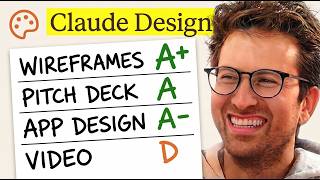
Claude Design delivers agency-level wireframes via smart PM-like questions and 90% solid pitch decks from minimal input, but video is only 5/10—prioritize low-fi wireframes first to save tokens and refine ideas.

Claude Design's questionnaire acts like a PM for superior wireframes and 90% ready pitch decks, saving hours—but video is only 5/10 and token costs add up fast. Start low-fi to iterate efficiently.

Claude Design generates brand-specific design systems from websites in 15 minutes, builds editable prototypes via chat, and hands off directly to Claude Code, enabling founders to ship landing pages and decks without designers.

Claude Design generates custom design systems and interactive prototypes from text prompts using Claude 3 Opus, then exports directly to Claude Code repos—ideal for founders shipping landing pages fast without designers.

Attach your codebase to Claude Design; it redesigns the full app UI into an interactive prototype in ~7 minutes, enables on-the-fly edits, and hands off directly to Claude Code—closing the design gap in AI coding workflows.

Paid Claude users generate responsive landing pages, prototypes, and slide decks by sketching wireframes, answering AI questionnaires, and refining via chat—powered by Opus 4.7, with exports to HTML, PDF, or Claude Code.

Claude Design turns rough sketches, prompts, or Figma files into responsive landing pages, prototypes, and slides through conversational iteration, exporting to HTML or code for paid Claude users.

Anthropic's Claude Design builds prototypes, slides, and one-pagers via chat with Claude Opus 4.7, saving users like Brilliant.org 10x prompts (20 to 2) on complex pages through brand integration, flexible inputs, and direct exports to Canva or code.

Claude Design builds prototypes and slides via chat using Opus 4.7, with brand integration and refinement tools; Brilliant cut complex pages from 20 to 2 prompts, Datadog weeks to minutes, but lacks drawing input for layouts.

Claude's new Design tool builds polished presentations, websites, wireframes, and 3D graphics via voice/text prompts, with iterative editing, Canva/PPT exports, and one-click code handoff for live deployment.

Upload brand assets, repo, and guidelines to Claude Design; it generates a 15-min design system for consistent slide decks, prototypes, and pages, powered by Opus 4.7's 82-91% visual reasoning benchmarks, with direct handoff to Claude Code.

Claude Design provides a graphical interface for building interactive prototypes, mockups, and slides with Claude, allowing visual tweaks and exports to code or PowerPoint, addressing frontend design gaps in Claude Code.

Claude Design (claude.ai/design) lets Pro+ users build interactive web/mobile prototypes visually via AI-guided prompts, direct edits, and code export—superior to code-first for iterating designs quickly.

Use Claude Code with Google Places API to find 10 local businesses by zip/niche, redesign homepages via Impeccable skills preserving logos/colors/images, add Ahrefs-sourced SEO blogs, deploy Vercel previews, and cold email owners—scales to 5+ sites in hours.
World-class designers intrigue with clear intent in portfolios, share the painful texture of projects, prioritize user needs over artifact polish, validate ideas early with users, own strategy and impact, lead decisively, and build coherent systems in the AI era.

Google Stitch 2 generates unique UI designs from Pinterest refs and exports design systems; Claude Code converts them to responsive React apps with animations in under 45 min, avoiding generic AI templates.

Use Google Stitch 2 to generate unconstrained UI designs from references, then feed to Claude Code for a fully responsive React site with animations—builds unique $10k-look websites in under 30 mins, avoiding generic AI templates.

Designers must prototype AI interfaces directly in code to grasp real behaviors, as Figma mocks fail to capture agentic workflows—Brian Lovin's Notion playbook.

Brian Lovin details how Notion's team shifted from Figma mocks to code-based prototypes for AI features, designing agent harnesses at the model's edge amid blurring roles and rapid changes.

Amir demos end-to-end process using Idea Browser for ideation/context, Paper for design iteration, Tail Arc components, and analytics for A/B tests to build/refine a sales AI landing page—avoiding vibe-coded pitfalls.

Google Stitch generates Figma-like designs from prompts for landing pages; export to AI Studio for functional prototypes via Gemini—free for Flash model, no designer needed.

Use these 5 Claude skills—Find Skills, Front-End Design, Benium UX Designer, Web Artifacts Builder, Skill Creator—to discover, apply, and customize AI tools that produce polished, non-generic front-end code and UX flows.

Google Stitch excels at quick UI ideation but fails for production code; Verdant paired with Claude Opus 4.6 and Frontend Design Skill enables plan-first, code-iterative workflows that deliver hierarchy, responsiveness, and product-fit UIs directly in your repo.

Google repositions Stitch from prompt-to-UI generator to infinite-canvas AI design workspace that reasons across projects, exports reusable rules via DESIGN.md, auto-generates prototypes, and feeds into tools like Claude Code for rapid implementation.
Switchable AI prompt mode in Express generates designs from text; Photoshop's sidebar AI automates layer-aware edits like masking and background removal in beta.