#cloud
Every summary, chronological. Filter by category, tag, or source from the rail.
Optimizing Inference Platforms for Trillion-Parameter Workloads
Inference platforms must prioritize KV cache locality and intelligent workload scheduling to manage the high cost of prefill, treating heterogeneous GPU capacity like a game of Tetris to balance real-time agentic traffic with overnight batch processing.
 AI Engineer
Scaling Data Centers Through AI-Driven Demand Response
The AI Energy Management Alliance (AEMA) is leveraging Emerald AI’s software to coordinate data center power usage with grid capacity, potentially unlocking 100 gigawatts of new capacity by shifting compute loads instead of relying on diesel generators.
Harness Engineering: Scaling Production AI Agents
To scale AI agents, developers must separate the model from the 'harness'—the infrastructure for memory, tools, and observability—allowing each component to scale independently rather than bundling everything into a single, monolithic container.
 AI Engineer
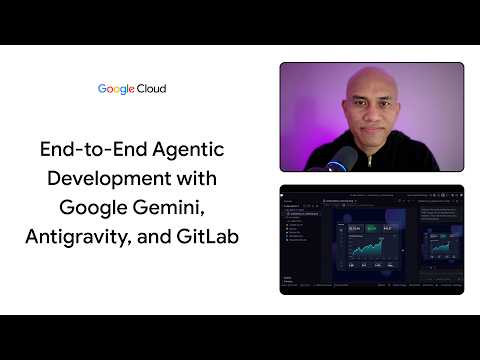
End-to-End Agentic Development with Gemini and GitLab
By integrating Google Gemini with the GitLab Duo Agent Platform and Antigravity IDE, developers can automate the entire lifecycle of a feature—from UI design and issue tracking to code generation, automated security reviews, and cloud deployment.
 Google Cloud Tech
Digital Sovereignty: Maintaining Control in AI Systems
Digital sovereignty is the ability to maintain control over data, operations, technology, and AI models. Rather than a barrier to innovation, it is an architectural priority that ensures security, trust, and long-term flexibility.
 IBM Technology
Nvidia’s Competitive Edge Shifts from GPUs to System Orchestration
As GPU competition rises, Nvidia is maintaining its market lead by dominating the surrounding infrastructure—specifically data orchestration and networking—required to run megascale AI data centers efficiently.
Rapid Prototyping and Deployment with Google AI Studio
Use Google AI Studio's build mode to generate, iterate, and deploy full-stack web applications via natural language prompts, bypassing manual coding for initial scaffolding.
 Google Cloud Tech
Industrial AI Scaling, Local Models, and Cybersecurity Risks
The panel discusses the shift toward industrial-scale AI infrastructure, the rise of high-performance local models like Meta's Muse Glimmer, and the emerging cybersecurity implications of autonomous agent capabilities in upcoming models like OpenAI's Astra.
 IBM Technology
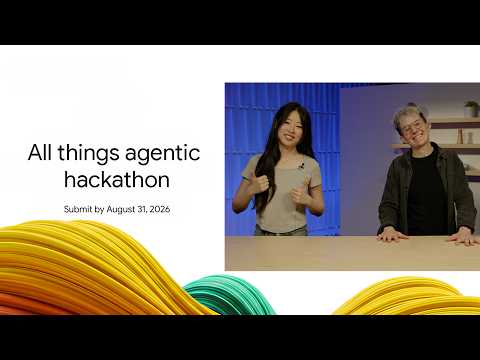
Google 'All Things Agentic' Hackathon Overview
Google is hosting a global hackathon with $180,000 in prizes, challenging developers to build autonomous, production-ready AI agents using Gemini 3.5 and Google Cloud.
 Google Cloud Tech
Integrating Daybreak Cybersecurity Models into AWS Bedrock
OpenAI has expanded its partnership with AWS, making Daybreak Blue and Red cybersecurity models available through Amazon Bedrock to streamline enterprise security workflows.
Runware's Modular Pods: A Portable Alternative to Data Centers
Runware is deploying modular, transportable 'Sonic Inference Pods' to provide decentralized, waterless AI inference capacity that scales faster than traditional, fixed-facility data centers.
AWS and Superblocks: Bringing Vibe Coding to the Private Cloud
Superblocks has partnered with AWS to embed 'vibe coding' tools directly into enterprise private clouds, allowing businesses to build AI-powered apps without data leaving their secure environment.
Investors Favor Cloud Infrastructure Over Speculative AI Labs
Investors are currently rewarding cloud providers for massive AI-related capital expenditures because they show immediate revenue growth, while penalizing companies that spend heavily on AI without a clear, sustainable revenue source.
Right-sizing Cloud Workloads with Conformal Prediction
The RSR framework uses conformal prediction to provide statistically rigorous, uncertainty-aware resource recommendations for virtual machines, balancing cost-efficiency with performance guarantees.
Implementing Semantic Search with Agent Retrieval
Agent Retrieval (formerly Vector Search 2.0) automates the complex pipeline of generating embeddings and managing vector indexes, allowing developers to implement hybrid semantic search without needing machine learning expertise.
 Google Cloud Tech
The Structural Trap of European AI Sovereignty
Europe’s AI industrial strategy is failing because it treats cloud and AI as separate issues. By focusing on frontier model training while ignoring the reality of inference distribution, European policy inadvertently deepens reliance on US hyperscalers.
Building Scalable Multi-Agent Systems with A2A and Agent Registry
The Agent2Agent (A2A) protocol and Agent Registry solve agent sprawl by providing a standardized, discoverable way for AI agents to communicate, replacing hard-coded URLs with a centralized, governed directory.
 Google Cloud Tech
Netris Automates Data Center Networking for AI Neoclouds
Netris provides hardware-accelerated network automation to help emerging cloud providers (neoclouds) deploy GPU clusters faster by replacing manual configuration with deterministic, vendor-agnostic software.
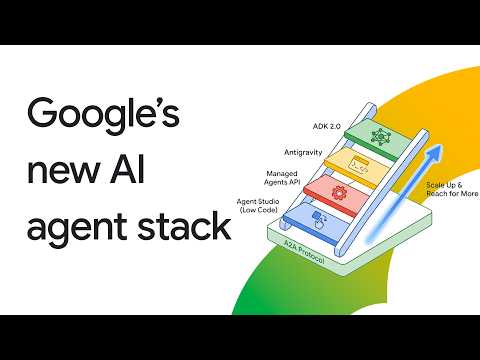
Google's Four-Layer AI Agent Stack: Architecture and Tools
Google's new agent stack provides a unified, scalable path from low-code UI to production-grade code, anchored by the Gemini 3.5 Flash model and the Agent2Agent (A2A) protocol.
 Google Cloud Tech
The Three Pillars of Modern Cloud Infrastructure
Cloud providers are evolving from simple app hosting to comprehensive AI platforms, offering new primitives for agentic workflows, AI gateways, and secure sandboxing.
Preventing Silent Infrastructure Cost Leaks in Python Pipelines
A subtle bug in a Python data pipeline caused $80,000 in excess cloud costs due to inefficient resource handling; the fix required just four lines of code to implement proper connection management.
The Reality Check: AI Costs, Routing, and Cloud Shifts
As AI moves from hype to production, companies are shifting toward tiered routing to manage costs and capacity, while hardware limitations are forcing a pivot from pure on-device AI to hybrid cloud architectures.
 IBM Technology
Deploying Production-Ready LLM Endpoints with RunPod
RunPod provides GPU infrastructure that allows developers to deploy models from the Hub to serverless endpoints in under five minutes, featuring autoscaling, pay-per-request billing, and built-in observability.
 AI Engineer
Kubernetes vs. OpenShift: Platform Engineering Trade-offs
Kubernetes provides the raw container orchestration engine, while OpenShift offers an opinionated, integrated platform that bundles CI/CD, security, and management tools to reduce operational overhead.
Automating Remote GPU Workflows with Google Colab CLI
Google's new open-source Colab CLI enables developers and AI agents to provision, execute code on, and manage remote GPU/TPU runtimes directly from the terminal, streamlining automated workflows.
Building Production-Ready AI Agents: A 5-Day Intensive Guide
Google Cloud and Kaggle are launching a 5-day intensive course focused on moving AI agents from local prototypes to governed, scalable, and observable production-ready fleets.
 Google Cloud Tech
Connecting AI Agents to Enterprise Data via AlloyDB MCP
The AlloyDB remote Model Context Protocol (MCP) server enables AI agents to query enterprise databases directly, using managed infrastructure, IAM-based security, and built-in AI functions for semantic analysis.
 Google Cloud Tech
Navigating AI Security: Strategy vs. Platform Reality
While platform leaders advocate for centralized AI security and agentic defense, developers face significant risks from platform-level vulnerabilities and slow credential revocation, highlighting a gap between security advice and infrastructure execution.
Scaling AI Agents from Laptop to Enterprise Production
Transitioning AI agents from local experiments to enterprise-scale production requires moving beyond simple code to a robust platform that prioritizes observability, governance, and security guardrails like Model Armor.
 Google Cloud Tech
Building Full-Stack Apps with Google AI Studio
Google AI Studio now supports frictionless, full-stack app deployment to Cloud Run and Cloud SQL using only a Gmail account, eliminating the need for GCP projects, credit cards, or manual coding.
 Google Cloud Tech
Showing 30 of 82